Showing posts with label Nassim Nicholas Taleb. Show all posts

October 14, 2013

Nassim N. Taleb. If you piss against the wind and get wet, that is no "Black Swan". That is only being stupid

Sir, John Authers in “Taleb's pared-back argument carries an unsettling truth”, October 14 refers to “The Black Swan, which explained market’s difficulties in pricing extreme events for which they had no precedent”. Those arguments, “extreme events” and “no precedent” have provided the perfect cover for failed bank regulators to hide behind.

Just knowing that all bank crises in history have been caused by excessive exposures to what has ex ante been perceived as absolutely safe, but that ex post turned out to be risky, should have made it clear to regulators that playing around with distortive capital requirements for banks, based on ex ante perceived risk… had to doom the banks to excessive exposures to something erroneously perceived as absolutely safe, all aggravated by the fact that banks then would now hold especially little capital.

Of course Taleb is right in arguing that “natural systems work by allowing things that do not work to break”, but, sincerely you do not have to be a renowned scientist or expert to know that. For instance, little unknown me, told bank regulators working on Basel II in a work shop at the World Bank in May 2003: “A regulation that regulates less, but is more active and trigger-happy, and treats a bank failure as something normal, as it should be, could be a much more effective regulation. The avoidance of a crisis, by any means, might strangely lead us to the one and only bank, therefore setting us up for the mother of all moral hazards—just to proceed later to the other of all bank crises.”

Authers also interprets Taleb writing “Governments should have a risk manager’s mindset, and not try to prod the economy growing. Without a risk-averse mindset, risks will grow”. I am not sure that is what Taleb means, but if so, he is wrong. Currently the biggest risk is the excessive risk-averse mindset of governments and regulators which make them distort so much of the natural systems, and for instance cause our banks to be refinancing the past instead of financing the future.

“The western economy is over-centralized and that creates extra risk”. Absolutely and that is why in November 1999 I wrote in an Op Ed “The possible Big Bang that scares me the most is the one that could happen the day those genius bank regulators in Basel, playing Gods, manage to introduce a systemic error in the financial system, which will cause the collapse”.

 PS. Not the first time I’ve written to FT on this: Here and Here


PS. I am not a regulator but once, way back, 1966, I was a sailor… though not a drunk one… at least not too much… and so I do know something of what I am talking about.


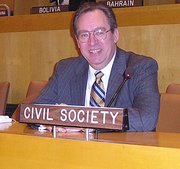
Ms Bolivia...where during four months I learned not to piss against the wind... 1966... 16 years old.


July 14, 2009

A mystic crusade against debt?

Sir, there is too much debt because debt has been given huge fiscal incentives; that banks have in some circumstances been authorized to have extraordinarily high leverages; that consumer debt pushers have been able to act freely with an impudence that any drug dealer or casino owner would kill for; and that markets followed faulty risk rating signals that indicated some borrowers were risk-free no matter how much debt they contracted.

And there is nothing “mystic” with that, as the almost embarrassing manifest of Nassim Nicholas Taleb and Mark Spitznagel “Time to tackle the real evil: too much debt” July 14 would seem to indicate. The authors call for economic demystification by calling for a mystic crusade against debt.

I have professionally been involved with many debt to equity conversion operations and of course they are often very useful but let´s face it, at the end of the day, a loss is a loss is a loss, whether you are holding debt or equity, just that the latter usually allows you to bluff yourself a little longer.

April 08, 2009

What we have is a genetically modified Black Swan

Sir if you throw a coin, betting on head or tail, and then suddenly it lands on its side then that is a real and natural Black Swan event. But, if you alter the coin in such a way that it must land on its side, more sooner than later, then when that happens can no longer be referred to as a real and natural Black Swan since it is a manmade event. At best we could perhaps refer to it as a genetically modified Black Swan.

The current financial crisis would not have happened had the regulators not empowered some few credit rating agencies as their official risk surveyors and these had not with their AAA signs guided the risk adverse herds of capital in an absolutely wrong direction.

In this respect it is truly surprising that Nassim Nicholas Taleb, a scholar on Black Swans, does not include among his “Ten principles for a Black Swan-proof world”, April 8, the importance of not forcing or stimulating the world to follow the opinions of just a few.

December 08, 2008

Should the credit raters undergo a security clearance?

Sir, Nassim Nicholas Taleb and Pablo Triana, “Bystanders to this financial crisis were many” December 8, are right in that we need to extract more accountability from the experts and from those that showed themselves incapable of questioning the experts. And, now and again, a please-return-your-Nobel-Prize back does not have to be so bad for the Nobel Prize either. That said I do not share in the extremisms like that of retiring “Value-at-Risk” books from the shelves” especially because those are exactly the books that now need to be reread so that we can learn from a better understanding of What-Was-Really-at-Risk.

Also, let us not look at this financial crisis as created only by financial scientists gone mad. The financial regulators are also to blame. Not only did they introduce minimum capital requirements for banks based on their own subjective interpretation of what risk means and without giving much thought on how that would affect the whole system but they also empowered some few credit rating agencies to be the official guides on risks which, as we have seen, was a magnificent act of pure madness.

Let me here ask the question that perhaps best helps to place the whole issue of the credit rating agencies in its real perspective. Since these agencies have been given so immense powers that if misused could turn them into dangerous weapons of mass destruction capable of inflicting big sufferings on humanity… should then the individual credit raters have to undergo a security clearance? Of course I do not imply any planned wrong doings, that I swear, but I guess you have to agree with me that this is at least great stuff for nail-biting movies.